Underfill

Capillary Underfill

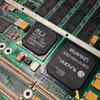
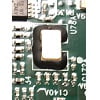
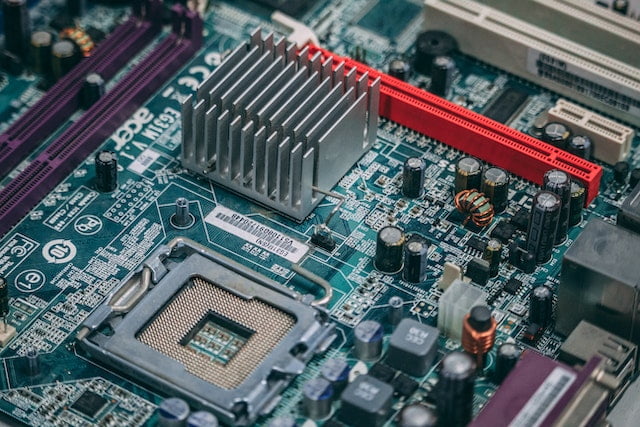
The Capillary Underfill process consists of dispensing a void-free fluid to encapsulate the bottom side of a silicon die or BGA device. Encapsulation is thought to cover the top surface, typically where fragile interconnects are located, but in the case of Capillary Underfill, the fragile interconnects are located on the underside of the component. Underfilling enhances the connection strength of electrical contacts and compensates for differences in thermal expansion rates of the two joining materials that could lead to product failure. Underfill is typically used for applications in high shock environments or when consistent reliability is required.

Underfill

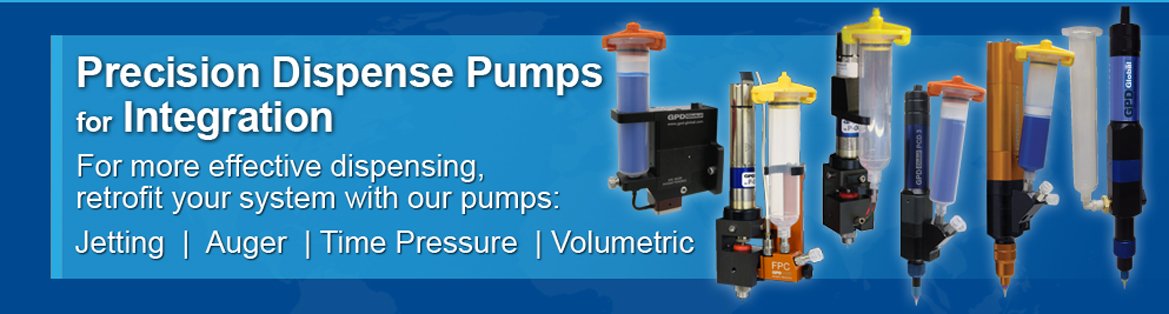
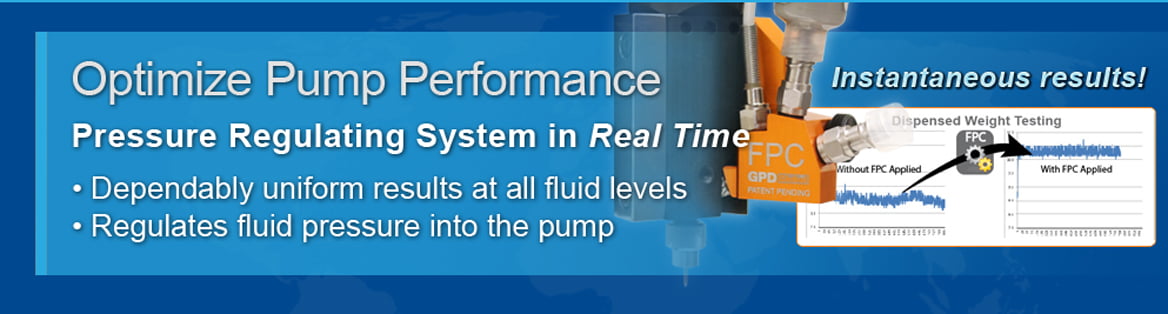
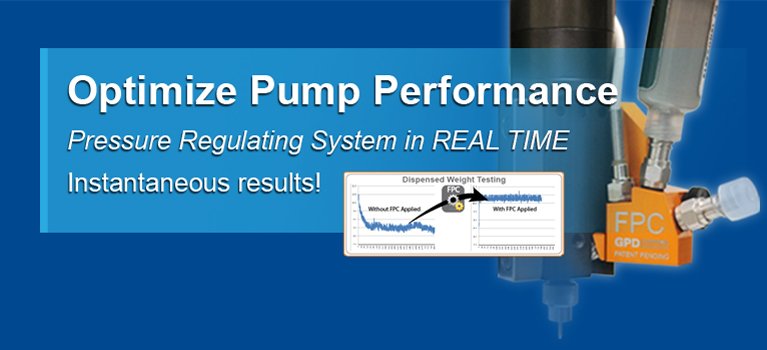
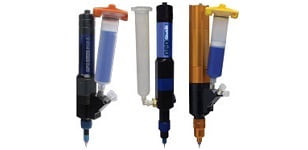
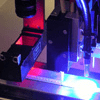
Underfill is a low viscosity fluid that tends to drip and drool with most dispense technologies. The environmental temperature where underfill is used becomes elevated due to the product requiring to be up to 80 degrees C. The elevated environmental temperature causes reduced viscosity in the underfill which in turn causes the amount of fluid being dispensed to vary for most dispense technologies. GPD Global's innovative PCD dispense technology is a continuously volumetric dispense system that dispenses the same volume of fluid whether the fluid has the viscosity of water or a thick paste. Since the pump is continuously volumetric, the system does not need to recharge or reload as is required with other volumetric pumps. PCD technology delivers a consistent volume of fluid whether it is at ambient temperature or elevated temperatures. This means you can have a consistent dispense process that requires only limited calibration. You can be confident your product has a consistent amount of fluid from start to finish with less rework and scrap. Check out PCD for Underfill.

PCD & Underfill


PCD dispense technology excels at dispensing underfill on components 10 mm and larger because of its ability to dispense fluids at a controlled, high flow rate. Coupled with GPD Global's standard S Type taper tip nozzles, controlled flow rates are unmatched.

Process set up is made easy by using the GPD Global Weight Calibrated Shapes (WCS) routine. WCS allows the operator to define an underfill process and then specify a weight for the underfill to be dispensed. The system automatically determines the correct pump speed for the underfill pattern.

The Underfill Process

The basic steps of an underfill process are:

1. Pre-Heating from ambient temperature to 80 degrees C.
2. Vision alignment of the die to be underfilled.
3. Locate surface to dispense (z axis).
4. Dispense the fill pass - multiple passes may be required.
5. Dispense the fillet pass - may not be required depending on chip size or underfill material selection.
6. Post-Heating - product dependent.

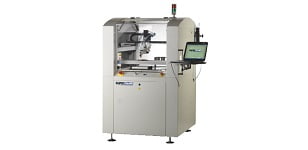
Inline systems are recommended for underfill due to their ability to use pre- and post-heaters. Pre-heating is used to quickly heat a product from ambient temperature to process temperature. Different methods of pre-heating are available. The most common method is a custom contact vacuum fixture. This fixture offers the quickest and most uniform heat transfer. A universal heating method utilizes forced air. Forced air allows any substrate to be heated no matter the geometry or size, but time to heat is longer vs. contact heating. To ensure that the substrates are not overheated, a temperature monitoring system has been employed. If the substrate reaches the operating temperature, heat is removed and the substrate is transported to the work area. Post-heating is used after the dispense process to continue the flowing process. Depending on the application, the post-heater may be used to gel an underfill in order to hold it in place before the next step. ...more (pdf)

Recommended Equipment


            MAX II Series


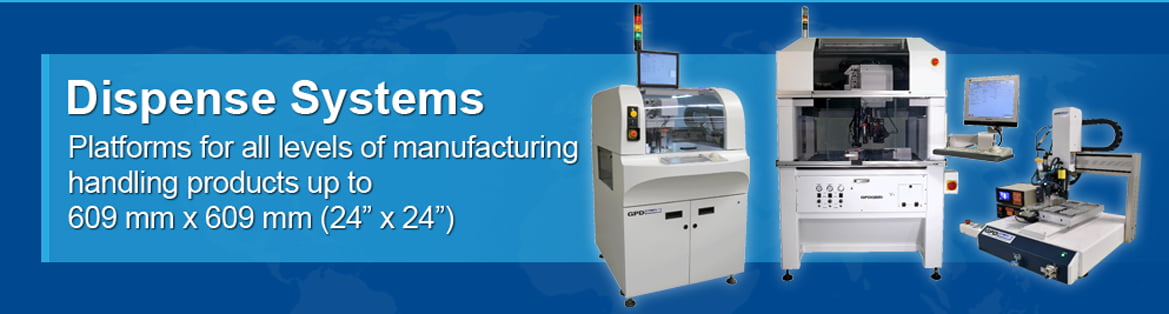
    DS Series

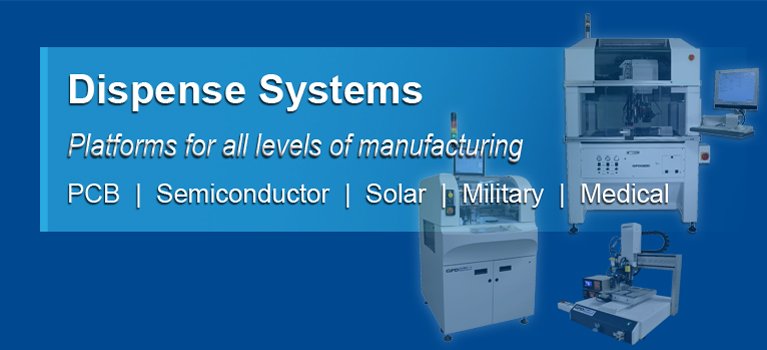
GPD Global recommends the MAX II Series or DS Series for heated underfill applications. The systems are equipped with either 1, 2, or 3 heated zones for the substrate depending on the machine configuration and application. Heating of the substrate, up to 100 degrees C, is done via custom contact vacuum fixturing or non-contact via forced air. Other available system features are Substrate Temperature Monitoring in the Pre-Heat, Closed-Loop Process Calibration, Full View Illumination, fully automatic nozzle calibration and true nozzle cleaning.